Hydroponics vs Aeroponics vs Aquaponics: Which System is Best for You?
Introduction
Modern farming has evolved significantly, leading to a massive debate over hydroponics vs aeroponics vs aquaponics for home and commercial growers. As traditional soil-based gardening becomes more difficult due to limited space and changing climates, understanding the mechanics of hydroponics vs aeroponics vs aquaponics becomes essential for sustainable living. Each of these soil-less methods offers unique advantages, but choosing between hydroponics vs aeroponics vs aquaponics depends on your budget, expertise, and the specific crops you wish to grow. In this detailed guide, we will break down the core differences of hydroponics vs aeroponics vs aquaponics to help you identify which system aligns with your goals. Whether you want to grow fresh lettuce in your kitchen or start a massive indoor farm, the comparison of hydroponics vs aeroponics vs aquaponics provides the foundation for success. By exploring the water usage, nutrient delivery, and maintenance requirements of hydroponics vs aeroponics vs aquaponics, you can make an informed decision that ensures a healthy and productive harvest for years to come.
Understanding Hydroponics: The Foundation of Soil-less Growth
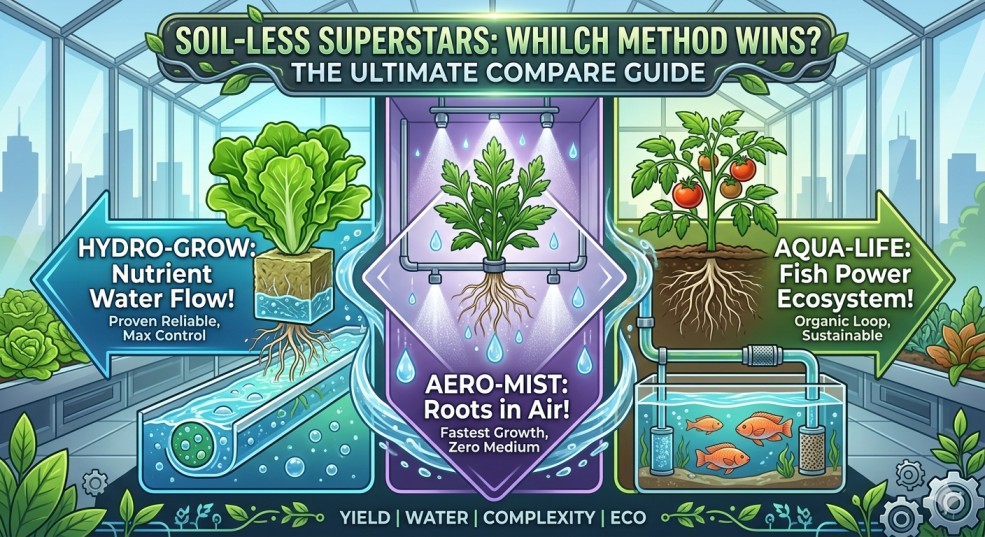
Hydroponics is perhaps the most well-known method when discussing hydroponics vs aeroponics vs aquaponics. It involves growing plants in a nutrient-rich water solution, completely bypassing the need for soil. In the context of hydroponics vs aeroponics vs aquaponics, hydroponics is often considered the easiest entry point for beginners because the equipment is widely available and the concepts are straightforward. Most hydroponics vs aeroponics vs aquaponics enthusiasts start with a Deep Water Culture (DWC) or Nutrient Film Technique (NFT) system. The main highlight of hydroponics vs aeroponics vs aquaponics comparisons often focuses on how hydroponics allows for total control over mineral intake. However, when you look at hydroponics vs aeroponics vs aquaponics, you must remember that hydroponics requires manual addition of chemical fertilizers to keep the plants thriving. It remains a staple in the hydroponics vs aeroponics vs aquaponics world because of its reliability and proven track record in producing high-quality yields in controlled environments.
Comparison: Medium Usage
| System Type | Primary Growing Medium |
|---|---|
| Hydroponics | Uses inert media like clay pebbles or rockwool |
| Aeroponics | Uses no medium as roots are suspended in air |
Aeroponics: The High-Tech Mist Method
Aeroponics represents the most advanced technology in the hydroponics vs aeroponics vs aquaponics spectrum. Instead of submerging roots in water, this method uses a fine mist of nutrient-dense water to coat the roots, which hang in the air. When analyzing hydroponics vs aeroponics vs aquaponics, aeroponics stands out for its incredible water efficiency, as it uses even less water than traditional hydroponic setups. The air-rich environment in hydroponics vs aeroponics vs aquaponics comparisons gives aeroponics an edge in growth speed, as roots have constant access to oxygen. Despite these benefits, a hydroponics vs aeroponics vs aquaponics analysis reveals that aeroponics is the most sensitive to power outages; if the misters stop, the roots can dry out in minutes. For those looking at hydroponics vs aeroponics vs aquaponics for commercial scalability, aeroponics offers the highest density of plants per square foot. It is a sophisticated choice in the hydroponics vs aeroponics vs aquaponics debate that requires precision timing and high-quality nozzles.
Comparison: Water Consumption Efficiency
| System Type | Water Usage Level |
|---|---|
| Aeroponics | Highest efficiency using minimal misting volume |
| Aquaponics | High efficiency as water is recycled in a loop |
Aquaponics: The Ecosystem Approach
Aquaponics is the most unique contender in the hydroponics vs aeroponics vs aquaponics discussion because it incorporates live fish into the system. This method creates a symbiotic relationship where fish waste provides the nutrients for the plants, and the plants filter the water for the fish. In the world of hydroponics vs aeroponics vs aquaponics, aquaponics is praised for being the most organic and self-sustaining option. Unlike the other two in hydroponics vs aeroponics vs aquaponics, you don’t need to buy expensive chemical nutrients because the fish do the work for you. However, managing hydroponics vs aeroponics vs aquaponics shows that aquaponics has a steeper learning curve because you must keep both plants and animals alive simultaneously. Balancing the pH levels for both fish and greens makes this the most complex choice in hydroponics vs aeroponics vs aquaponics. For those who want a closed-loop garden, the hydroponics vs aeroponics vs aquaponics debate usually ends with a preference for the natural beauty of aquaponics.
Comparison: Nutrient Source
| System Type | Nutrient Origin |
|---|---|
| Aquaponics | Natural waste produced by live fish |
| Hydroponics | Synthetic or organic liquid fertilizers |
Growth Rates and Yield Comparison
When growers ask about hydroponics vs aeroponics vs aquaponics, they are usually most concerned with how fast their food will grow. Generally, hydroponics vs aeroponics vs aquaponics studies show that aeroponics produces the fastest growth because of the high oxygen availability to the root zone. Hydroponics follows closely in the hydroponics vs aeroponics vs aquaponics ranking, offering much faster results than traditional soil. Aquaponics might have a slightly slower start in the hydroponics vs aeroponics vs aquaponics timeline because the bacterial colony needs time to establish itself before nutrients are fully available. However, once established, the hydroponics vs aeroponics vs aquaponics yields are quite comparable across all three methods. Selecting between hydroponics vs aeroponics vs aquaponics often comes down to whether you prioritize a quick “plug and play” setup or a long-term sustainable harvest. Each system within the hydroponics vs aeroponics vs aquaponics category will outperform soil gardening by at least 30-50% in terms of speed.
Maintenance and Technical Difficulty
The level of effort required is a major factor in the hydroponics vs aeroponics vs aquaponics decision-making process. Hydroponics is generally the most forgiving in the hydroponics vs aeroponics vs aquaponics trio, requiring weekly water checks and nutrient balancing. Aeroponics is at the top of the hydroponics vs aeroponics vs aquaponics difficulty scale because the high-pressure pumps and misters require frequent cleaning to prevent clogging. In the hydroponics vs aeroponics vs aquaponics breakdown, aquaponics requires the most diverse knowledge, as you must understand both horticulture and aquaculture. If a pump fails in any hydroponics vs aeroponics vs aquaponics system, your crops are at risk, but the biological complexity of aquaponics makes it harder to fix quickly. Beginners often prefer the simplicity of hydroponics when starting their hydroponics vs aeroponics vs aquaponics journey. Advanced hobbyists, however, often migrate toward the technical challenge that defines hydroponics vs aeroponics vs aquaponics innovation.
Comparison: Ease of Setup
| System Type | Difficulty Level |
|---|---|
| Hydroponics | Easy to Moderate for most beginners |
| Aeroponics | Advanced due to technical components |
Initial Costs and Long-term Investment
Setting up a new garden requires an initial investment, and hydroponics vs aeroponics vs aquaponics costs vary widely. A basic hydroponic bucket system is the cheapest way to enter the hydroponics vs aeroponics vs aquaponics market. On the other hand, hydroponics vs aeroponics vs aquaponics research shows that aquaponics has a high upfront cost due to the need for fish tanks, filtration systems, and the fish themselves. Aeroponics also demands a significant budget within the hydroponics vs aeroponics vs aquaponics landscape because of the specialized high-pressure pumps and timers. However, when looking at long-term hydroponics vs aeroponics vs aquaponics expenses, aquaponics can be the most economical because you save money on nutrients. You must weigh the “now” vs the “later” when choosing your path in hydroponics vs aeroponics vs aquaponics. Many people find that the higher initial price of hydroponics vs aeroponics vs aquaponics professional kits is worth the reduction in manual labor and waste over time.
Comparison: Operating Costs
| System Type | Main Expense |
|---|---|
| Hydroponics | Ongoing cost of nutrient solutions |
| Aquaponics | Cost of fish food and tank electricity |
Scalability for Commercial Success
If you are looking to turn your hobby into a business, hydroponics vs aeroponics vs aquaponics scalability is a vital consideration. Most vertical farms today utilize a hydroponics vs aeroponics vs aquaponics hybrid, often leaning toward aeroponics for leafy greens to maximize vertical space. Hydroponics is very easy to scale horizontally, making it a favorite in the hydroponics vs aeroponics vs aquaponics commercial sector for tomatoes and peppers. Aquaponics is harder to scale in the hydroponics vs aeroponics vs aquaponics world because the ratio of fish to plants must be perfectly maintained, which becomes difficult in massive installations. However, for “farm-to-table” restaurants, the hydroponics vs aeroponics vs aquaponics choice often leans toward aquaponics because it provides both vegetables and protein (fish) from the same system. Your business model will ultimately dictate where you land on the hydroponics vs aeroponics vs aquaponics spectrum. Modern agriculture is increasingly relying on the data-driven results provided by hydroponics vs aeroponics vs aquaponics technologies to feed urban populations.
Environmental Sustainability and Impact
All three methods in the hydroponics vs aeroponics vs aquaponics debate are more eco-friendly than traditional farming because they use significantly less water and land. Aquaponics is often cited as the “greenest” in hydroponics vs aeroponics vs aquaponics comparisons because it mimics a natural ecosystem and eliminates chemical runoff. Aeroponics contributes to sustainability in the hydroponics vs aeroponics vs aquaponics category by using the absolute minimum amount of water possible. Hydroponics, while still efficient, sometimes raises concerns in hydroponics vs aeroponics vs aquaponics discussions regarding the disposal of used nutrient solutions. However, modern hydroponics vs aeroponics vs aquaponics designs focus on “closed-loop” systems that recycle water indefinitely. By choosing any of these hydroponics vs aeroponics vs aquaponics methods, you are actively reducing your carbon footprint and saving precious water resources. The future of the planet may very well depend on our ability to master hydroponics vs aeroponics vs aquaponics at a global scale.
Conclusion
Deciding between hydroponics vs aeroponics vs aquaponics is a journey toward more efficient and conscious food production. Each system—hydroponics vs aeroponics vs aquaponics—offers a unique set of benefits and challenges that cater to different types of growers. If you are looking for simplicity and low cost, hydroponics is your best bet in the hydroponics vs aeroponics vs aquaponics world. If you crave high-tech efficiency and have a higher budget, aeroponics is the clear winner of the hydroponics vs aeroponics vs aquaponics battle. For those who want to create a living, breathing ecosystem that provides both plants and fish, aquaponics stands alone in the hydroponics vs aeroponics vs aquaponics comparison. No matter which you choose—hydroponics vs aeroponics vs aquaponics—you are taking a step toward food independence and smarter resource management. We hope this comprehensive guide on hydroponics vs aeroponics vs aquaponics has clarified the technical details and helped you envision your future indoor garden. Start small, experiment often, and enjoy the incredible rewards that hydroponics vs aeroponics vs aquaponics can bring to your home and table.