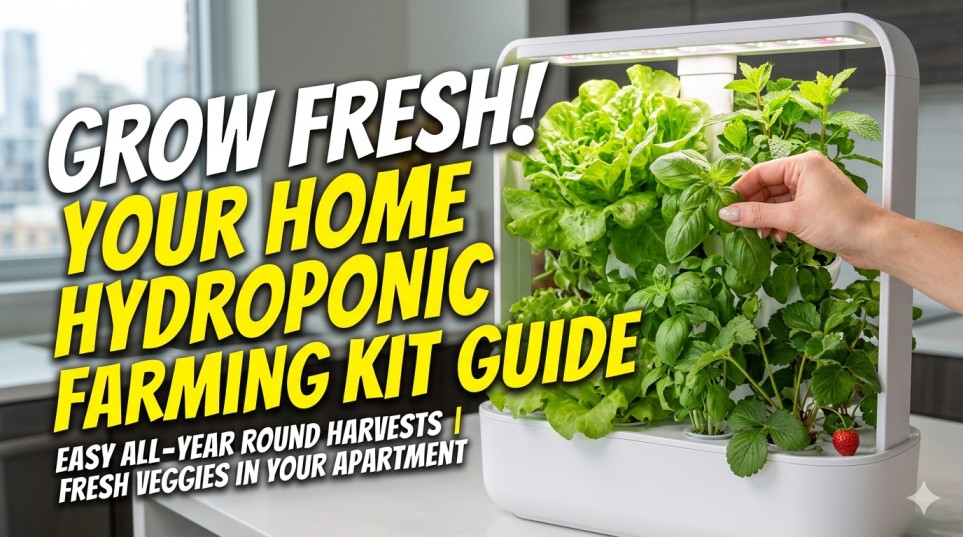
The Complete Guide to Choosing a Hydroponic Farming at Home Kit
Introduction
Starting your own indoor garden has never been easier than it is today with a high-quality hydroponic farming at home kit. Many people want to grow their own fresh vegetables but they lack the outdoor space or the right soil conditions. A hydroponic farming at home kit solves this problem by using water and nutrient solutions instead of traditional dirt. This method allows plants to grow faster and healthier because they get exactly what they need without searching through soil. If you are looking to improve your lifestyle and eat cleaner, investing in a hydroponic farming at home kit is the perfect first step. These kits come in various sizes, making it possible for anyone to become a home farmer regardless of their living situation. In this detailed guide, we will explore how a hydroponic farming at home kit works and how you can select the best one for your specific needs and goals.
What Exactly is a Hydroponic Farming at Home Kit?
A hydroponic farming at home kit is a complete system designed to grow plants in a soil-less environment. Instead of using ground soil, the hydroponic farming at home kit uses a growing medium like clay pebbles or coco coir to support the roots. The most important part of any hydroponic farming at home kit is the nutrient-rich water that circulates through the system. This water provides all the minerals that a plant would usually get from the earth. Because the plants in a hydroponic farming at home kit do not have to work hard to find food, they can spend more energy on growing leaves and fruits. This leads to a much higher yield compared to traditional gardening methods. Many beginners prefer a pre-made hydroponic farming at home kit because it includes the pump, the reservoir, and the lighting needed to succeed.
Benefits of Using a Hydroponic Farming at Home Kit
The primary benefit of using a hydroponic farming at home kit is the ability to grow food all year round. Since a hydroponic farming at home kit is usually kept indoors, you are not dependent on the weather or the seasons. You can grow fresh lettuce in the middle of winter or tomatoes in the heat of summer using your hydroponic farming at home kit. Additionally, a hydroponic farming at home kit uses significantly less water than traditional gardening because the water is recycled within the system. This makes the hydroponic farming at home kit an eco-friendly choice for sustainable living. You also don’t have to worry about soil-borne pests or weeds when you use a hydroponic farming at home kit. This means you can avoid using harsh chemicals or pesticides on the food you eat, ensuring that every harvest from your hydroponic farming at home kit is organic and safe.
Comparison: Hydroponics vs. Traditional Soil
| Feature | Detail |
|---|---|
| Growth Speed | Hydroponics is 30% to 50% faster |
| Water Usage | Hydroponics uses 90% less water |
| Space Needed | Hydroponics requires very little space |
| Pest Control | No soil means almost no pests |
Types of Hydroponic Systems for Beginners
When you start looking for a hydroponic farming at home kit, you will notice different types of systems. The most common type found in a hydroponic farming at home kit is the Deep Water Culture (DWC) system. In this setup, the plant roots hang directly into the nutrient solution. Another popular option for a hydroponic farming at home kit is the Nutrient Film Technique (NFT), where a thin stream of water constantly flows over the roots. If you want something very simple, a Wick System hydroponic farming at home kit might be best as it has no moving parts. Each hydroponic farming at home kit has its own advantages depending on what you want to grow. For example, leafy greens thrive in almost any hydroponic farming at home kit, while larger plants might need a more robust Ebb and Flow hydroponic farming at home kit to support their weight.
Essential Components of Your Hydroponic Farming at Home Kit
Every successful hydroponic farming at home kit must have a few key components to function properly. First, the reservoir is the container that holds the water and nutrients for your hydroponic farming at home kit. Second, you need a reliable water pump or air stone to keep the water oxygenated within the hydroponic farming at home kit. Without oxygen, the roots in your hydroponic farming at home kit could rot. Third, the grow lights are essential if your hydroponic farming at home kit is placed in a dark room. Most modern hydroponic farming at home kit options come with LED lights that mimic natural sunlight. Finally, you will need a pH testing kit to ensure the water in your hydroponic farming at home kit stays at the right acidity level. Keeping these components in good shape will ensure your hydroponic farming at home kit lasts for many years of harvests.
Comparison: Lighting Types for Indoor Kits
| Light Type | Performance |
|---|---|
| LED Lights | High efficiency and low heat |
| Fluorescent | Good for starting seeds only |
| HID Lights | Powerful but uses a lot of energy |
| Natural Sun | Best but hard to control indoors |
Best Plants to Grow with a Hydroponic Farming at Home Kit
If you are a beginner, it is wise to start with easy plants in your hydroponic farming at home kit. Herbs like basil, mint, and cilantro are perfect for a small hydroponic farming at home kit because they grow quickly. Leafy greens such as spinach, kale, and various types of lettuce also do exceptionally well in a hydroponic farming at home kit. As you gain more experience with your hydroponic farming at home kit, you can try growing strawberries or even dwarf tomatoes. Some people even use a large hydroponic farming at home kit to grow cucumbers and peppers. The key is to match the plant size with the capacity of your hydroponic farming at home kit. Fast-growing plants allow you to see results quickly, which makes the experience of using a hydroponic farming at home kit much more rewarding for a new hobbyist.
Setting Up Your Hydroponic Farming at Home Kit
Setting up your hydroponic farming at home kit is a straightforward process that usually takes less than an hour. First, find a flat surface near an electrical outlet for your hydroponic farming at home kit. Assemble the plastic components according to the instructions provided with your hydroponic farming at home kit. Next, fill the reservoir of the hydroponic farming at home kit with clean water and add the recommended amount of liquid nutrients. Once the water is ready, place your seeds or seedlings into the grow baskets of the hydroponic farming at home kit. Turn on the pump and the lights to start the growing cycle of your hydroponic farming at home kit. It is important to monitor the water levels in your hydroponic farming at home kit every few days to make sure the plants never go thirsty. A well-maintained hydroponic farming at home kit will produce healthy food very quickly.
Comparison: Best Growing Mediums
| Medium | Best Use Case |
|---|---|
| Clay Pebbles | Great for drainage and reuse |
| Rockwool | Excellent for starting new seeds |
| Coconut Coir | Holds moisture very effectively |
| Perlite | Lightweight and very inexpensive |
Maintenance and Troubleshooting Your Kit
To keep your hydroponic farming at home kit running smoothly, regular maintenance is required. You should change the water in your hydroponic farming at home kit every two weeks to prevent the buildup of salts or algae. Checking the pH level of the solution in your hydroponic farming at home kit is also vital, as plants cannot absorb nutrients if the water is too acidic or too alkaline. If you notice your plants in the hydroponic farming at home kit are turning yellow, it might be a sign of a nutrient deficiency. In such cases, adjust the feeding schedule of your hydroponic farming at home kit. Also, ensure the pump of your hydroponic farming at home kit is clean and free of debris. Small steps like these will prevent common problems and keep your hydroponic farming at home kit productive throughout the year.
Cost Analysis: Is a Hydroponic Farming at Home Kit Worth It?
Many people wonder if the initial cost of a hydroponic farming at home kit is justified by the savings on groceries. While a high-quality hydroponic farming at home kit might seem expensive upfront, it pays for itself over time. When you use a hydroponic farming at home kit, you no longer have to buy expensive organic produce from the store. The cost of running a hydroponic farming at home kit is mostly limited to a small amount of electricity and periodic nutrient refills. Furthermore, the flavor of the food grown in your hydroponic farming at home kit is much better than store-bought items. Considering the health benefits and the convenience, a hydroponic farming at home kit is an excellent investment for any household. Many families find that their hydroponic farming at home kit becomes a fun educational tool for children as well.
Comparison: Small vs. Large Systems
| System Size | Production Capacity |
|---|---|
| Countertop Kit | Fresh herbs for daily cooking |
| Vertical Tower | Enough greens for a whole family |
| DIY PVC Pipe | High volume for serious hobbyists |
| Commercial Kit | Massive yield for selling produce |
Common Mistakes to Avoid with Your Kit
One of the biggest mistakes beginners make with a hydroponic farming at home kit is overfeeding the plants. Adding too many nutrients to your hydroponic farming at home kit can burn the roots and kill the plants. Another mistake is neglecting the light schedule of the hydroponic farming at home kit. Plants in a hydroponic farming at home kit need a period of darkness to rest, so don’t leave the lights on for 24 hours. Additionally, make sure the area around your hydroponic farming at home kit has good airflow to prevent mold. Some users forget to check the water temperature in their hydroponic farming at home kit; water that is too hot can hold less oxygen. By avoiding these simple errors, you can ensure that your hydroponic farming at home kit experience is successful from day one.
Future Trends in Home Hydroponics
The technology behind the hydroponic farming at home kit is constantly evolving to become more user-friendly. We are now seeing a hydroponic farming at home kit that includes smart sensors and mobile app integration. This allows you to monitor your hydroponic farming at home kit from your phone even when you are not at home. Some advanced hydroponic farming at home kit models even use AI to adjust the lighting and nutrients automatically. As urban living becomes more popular, the demand for a compact hydroponic farming at home kit continues to rise. We can expect future versions of the hydroponic farming at home kit to be even more efficient and stylish, fitting perfectly into modern kitchen designs. This trend makes it clear that the hydroponic farming at home kit is here to stay as a staple of modern sustainable living.
Comparison: Manual vs. Smart Kits
| Feature | System Style |
|---|---|
| Control Type | Smart kits use mobile apps |
| Price Point | Manual kits are much cheaper |
| Ease of Use | Smart kits are set-and-forget |
| Repairability | Manual kits are easier to fix |
Conclusion
In summary, starting your journey with a hydroponic farming at home kit is one of the most rewarding decisions you can make for your health and home. A hydroponic farming at home kit provides a simple, efficient, and clean way to grow your own food without the need for a backyard. Whether you want to grow fresh herbs, crunchy lettuce, or juicy tomatoes, there is a hydroponic farming at home kit designed just for you. By understanding how the hydroponic farming at home kit works and maintaining it properly, you can enjoy a continuous harvest of organic produce. The convenience and sustainability of a hydroponic farming at home kit make it an ideal solution for modern urban dwellers. Now is the perfect time to explore the various options and find the hydroponic farming at home kit that fits your lifestyle. Happy growing with your new hydroponic farming at home kit!