Mastering the DIY Drip Irrigation System for Potted Plants
Introduction to DIY Drip Irrigation System for Potted Plants
Developing a diy drip irrigation system for potted plants is one of the most effective ways to manage your home garden without spending hours with a watering can. Many urban gardeners struggle to keep their greenery alive during hot summers, but a diy drip irrigation system for potted plants provides a consistent and automated solution to this common problem. By setting up a diy drip irrigation system for potted plants, you ensure that every single pot receives exactly the right amount of moisture at the roots where it matters most. This guide is specifically designed to help you build a reliable diy drip irrigation system for potted plants using affordable materials found at any local hardware store. Whether you have a small balcony or a large patio, a diy drip irrigation system for potted plants will save you time, reduce water waste, and promote healthier plant growth. Investing your afternoon into a diy drip irrigation system for potted plants project will pay off for years to come as your plants flourish under a perfectly regulated watering schedule. Let us explore how you can transform your gardening routine with a custom diy drip irrigation system for potted plants.
The Core Benefits of Using a DIY Drip Irrigation System for Potted Plants
There are numerous advantages to installing a diy drip irrigation system for potted plants in your residential space. Firstly, a diy drip irrigation system for potted plants minimizes water evaporation by delivering liquid directly into the soil rather than spraying it through the air. Secondly, the diy drip irrigation system for potted plants approach prevents the common issue of overwatering, which often leads to root rot in container gardens. Since potted plants have limited soil volume, a diy drip irrigation system for potted plants maintains the delicate balance of moisture required for sensitive species. Additionally, a diy drip irrigation system for potted plants allows you to go on vacation without worrying about your plants drying out and dying. By utilizing a diy drip irrigation system for potted plants, you are adopting a sustainable lifestyle that respects water conservation. Many people find that a diy drip irrigation system for potted plants is far more efficient than any commercial kit because it is tailored to your specific layout. Every gardener should consider the long-term health benefits that a diy drip irrigation system for potted plants brings to their botanical collection.
Comparing Traditional Watering and Drip Systems
| Watering Method | Primary Outcome |
|---|---|
| Manual Watering Can | Uneven moisture and high water waste |
| DIY Drip Irrigation System for Potted Plants | Precise root targeting and water conservation |
Essential Components for a DIY Drip Irrigation System for Potted Plants
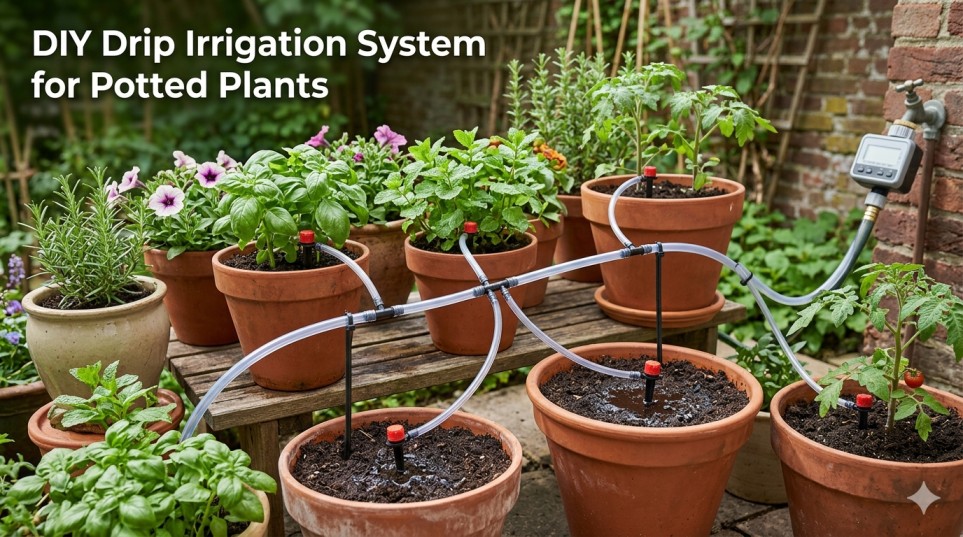
To successfully build a diy drip irrigation system for potted plants, you must first gather a few fundamental supplies. You will need a main supply line, usually a half-inch poly tubing, to serve as the backbone of your diy drip irrigation system for potted plants. Along with the tubing, a diy drip irrigation system for potted plants requires small emitters or drippers that control the flow of water into each individual pot. You must also purchase a pressure regulator for your diy drip irrigation system for potted plants to prevent the fittings from popping off under high city water pressure. To connect the various parts of the diy drip irrigation system for potted plants, you will need T-junctions, elbows, and end caps to seal the lines. A punch tool is also necessary to insert the smaller micro-tubing into the main line of your diy drip irrigation system for potted plants. Having all these components ready before you start the installation of your diy drip irrigation system for potted plants makes the process much faster. Quality parts ensure that your diy drip irrigation system for potted plants remains leak-free and functional throughout the growing season.
Supply Materials Comparison
| Component Name | System Function |
| Poly Main Tubing | Transports water across the garden area |
| Adjustable Emitters | Regulates water flow for each plant |
Planning Your DIY Drip Irrigation System for Potted Plants Layout
Proper planning is the secret to a high-performing diy drip irrigation system for potted plants. Start by arranging your pots in groups based on their water needs so your diy drip irrigation system for potted plants can be zoned efficiently. Measure the distance between your water faucet and the furthest pot to determine how much tubing your diy drip irrigation system for potted plants will require. It is helpful to draw a simple map of your patio before assembling the diy drip irrigation system for potted plants to visualize the path of the main line. Remember that a diy drip irrigation system for potted plants works best when the main line stays relatively level to maintain equal pressure. If you have hanging baskets, your diy drip irrigation system for potted plants will need vertical lines that are securely fastened to walls or supports. A thoughtful layout prevents the diy drip irrigation system for potted plants from becoming a tripping hazard in your outdoor living space. Taking thirty minutes to plan your diy drip irrigation system for potted plants saves hours of adjustments later. Every successful diy drip irrigation system for potted plants starts with a clear and organized design.
Step-by-Step Installation of the DIY Drip Irrigation System for Potted Plants
Installing your diy drip irrigation system for potted plants begins at the water source with the connection of the faucet adapter and filter. Once the head assembly is attached, roll out the main tubing for your diy drip irrigation system for potted plants along the path you previously mapped out. Use the punch tool to create small holes in the main line of the diy drip irrigation system for potted plants wherever a pot is located nearby. Insert the micro-tubing into these holes and run the other end into the center of the pot as part of your diy drip irrigation system for potted plants. At the end of each micro-tube, attach an emitter to complete that section of the diy drip irrigation system for potted plants. Secure the main line of the diy drip irrigation system for potted plants to the ground or balcony railing using zip ties or garden stakes. After all lines are connected, turn on the water slowly to flush out any debris from the diy drip irrigation system for potted plants before sealing the end caps. This careful installation process ensures that your diy drip irrigation system for potted plants operates at peak efficiency from the very first day.
Installation Tool Comparison
| Preferred Tool | Installation Task |
| Standard Punch Tool | Creating precise holes in the main line |
| Plastic Tube Cutter | Making clean square cuts on the tubing |
Optimizing Water Flow in Your DIY Drip Irrigation System for Potted Plants
Once the diy drip irrigation system for potted plants is installed, you must calibrate the emitters to suit the specific plants in your garden. Larger pots will require emitters with a higher flow rate within your diy drip irrigation system for potted plants, while small succulents need very little. You can adjust the twist-caps on most emitters in a diy drip irrigation system for potted plants to increase or decrease the dripping speed. It is important to run your diy drip irrigation system for potted plants for a full cycle while you are present to check for any dry pots. If you notice a drop in pressure at the end of your diy drip irrigation system for potted plants, you may need to reduce the number of emitters on that single line. Balancing the flow within a diy drip irrigation system for potted plants ensures that no plant is drowned while others remain thirsty. A well-optimized diy drip irrigation system for potted plants can reduce your monthly water bill significantly. Consistency is the hallmark of a properly tuned diy drip irrigation system for potted plants. Regular observation during the first week will help you perfect your diy drip irrigation system for potted plants settings.
Emitter Type Comparison
| Emitter Style | Recommended Use |
| Fixed Flow Emitter | Standard plants with consistent needs |
| Variable Stake Dripper | Large pots or trees requiring more water |
Integrating Automation into Your DIY Drip Irrigation System for Potted Plants
To make your diy drip irrigation system for potted plants truly effortless, adding a battery-operated timer is a fantastic upgrade. A timer allows your diy drip irrigation system for potted plants to run early in the morning when evaporation rates are at their lowest. This automation ensures that your diy drip irrigation system for potted plants follows a strict schedule, which is better for plant biological cycles. You can program your diy drip irrigation system for potted plants to run for fifteen minutes every day or longer sessions twice a week. Advanced timers for a diy drip irrigation system for potted plants even include rain sensors that pause the watering if it has recently rained. This level of control makes the diy drip irrigation system for potted plants a superior choice for busy professionals and frequent travelers. Even a simple mechanical timer can improve the performance of your diy drip irrigation system for potted plants by removing human error. Automation is the final step in creating a professional-grade diy drip irrigation system for potted plants. Your garden will thrive under the reliable care of an automated diy drip irrigation system for potted plants.
Maintenance and Winterization of Your DIY Drip Irrigation System for Potted Plants
Keeping your diy drip irrigation system for potted plants in good working order requires occasional maintenance throughout the year. Mineral deposits from hard water can sometimes block the emitters in your diy drip irrigation system for potted plants, so check them once a month. If an emitter in your diy drip irrigation system for potted plants stops working, simply soak it in a vinegar solution to clear the clog. In colder climates, it is essential to winterize your diy drip irrigation system for potted plants to prevent the plastic lines from cracking in the frost. Drain all the water out of the diy drip irrigation system for potted plants and store the timer indoors during the winter months. You should also check the main line of your diy drip irrigation system for potted plants for any damage caused by pets or heavy foot traffic. A small amount of care ensures that your diy drip irrigation system for potted plants lasts for many seasons without needing major repairs. Longevity is one of the greatest features of a well-maintained diy drip irrigation system for potted plants. Protecting your diy drip irrigation system for potted plants during the off-season is a smart move for any dedicated gardener.
Seasonal Maintenance Tasks
| Seasonal Action | Benefit to System |
| Summer Flush | Clears algae and heat-related debris |
| Winter Drainage | Prevents ice damage and pipe bursts |
Troubleshooting Common DIY Drip Irrigation System for Potted Plants Issues
Even the best diy drip irrigation system for potted plants can occasionally face minor technical issues that are easy to fix. If you see water pooling around the faucet, the washer in your diy drip irrigation system for potted plants connection might need replacement. Low pressure at the end of the diy drip irrigation system for potted plants usually indicates a leak or a kink somewhere in the main tubing. If only one plant is dry, the specific emitter for that pot in your diy drip irrigation system for potted plants is likely clogged. You can easily replace individual parts of a diy drip irrigation system for potted plants without having to rebuild the entire setup. Keeping a few spare T-junctions and emitters for your diy drip irrigation system for potted plants in a storage bin is a great idea. Most problems with a diy drip irrigation system for potted plants can be solved in under five minutes with basic hand tools. Understanding how to troubleshoot your diy drip irrigation system for potted plants makes you a more confident and self-sufficient gardener. A reliable diy drip irrigation system for potted plants is always just a quick adjustment away from perfect performance.
Conclusion: The Value of a DIY Drip Irrigation System for Potted Plants
In conclusion, creating a diy drip irrigation system for potted plants is a rewarding project that combines utility with the joy of gardening. Throughout this guide, we have explored how a diy drip irrigation system for potted plants can save time, conserve water, and significantly improve the health of your plants. By following the steps to plan and install your diy drip irrigation system for potted plants, you have built a custom solution that beats any generic store-bought product. The diy drip irrigation system for potted plants approach allows you to scale your garden as you add more pots to your collection over time. As you watch your balcony or patio transform into a lush oasis, you will realize the true impact of a consistent diy drip irrigation system for potted plants. Gardening should be a relaxing hobby, and a diy drip irrigation system for potted plants removes the stress of daily watering chores. We hope this comprehensive guide on the diy drip irrigation system for potted plants has given you the confidence to start your own project today. Your journey toward a more efficient and beautiful garden begins with your very own diy drip irrigation system for potted plants. Enjoy the peace of mind and the vibrant growth that only a high-quality diy drip irrigation system for potted plants can provide for your home.