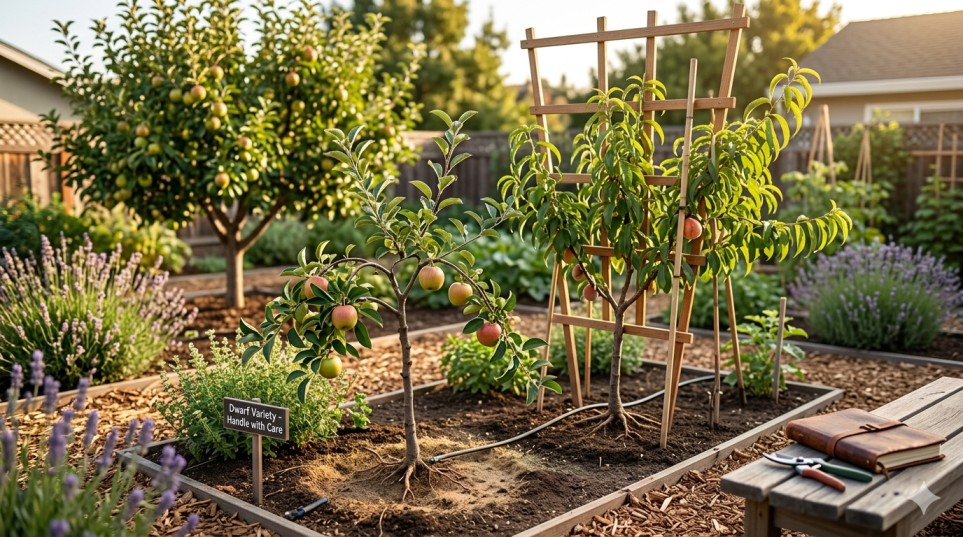
The Hidden Challenges: Understanding the Disadvantages of Dwarf Fruit Trees
Introduction
Growing your own food is a rewarding journey, and many home gardeners turn to smaller varieties to save space. However, it is essential to understand the disadvantages of dwarf fruit trees before you plant them in your backyard. While these trees are praised for their compact size and early fruiting capabilities, they come with a unique set of challenges that can frustrate an unprepared grower. The disadvantages of dwarf fruit trees often stem from their specialized rootstocks, which make them more fragile than their full-sized counterparts. In this article, we will take a deep dive into the disadvantages of dwarf fruit trees to help you decide if they are truly the right choice for your landscape. By exploring the disadvantages of dwarf fruit trees, you can prepare for the extra maintenance, structural support, and specific environmental needs they require to survive and thrive over the long term.
1. Fragile Root Systems and Structural Instability
One of the primary disadvantages of dwarf fruit trees is their incredibly shallow and brittle root system. Unlike standard trees that send deep taproots into the earth, the disadvantages of dwarf fruit trees include a lack of natural anchorage. This means that even a moderate windstorm can uproot the tree entirely. Because of these disadvantages of dwarf fruit trees, most varieties require permanent staking or a trellis system for their entire lives. If you ignore the disadvantages of dwarf fruit trees regarding stability, you risk losing your entire crop and the tree itself during a heavy rain or high wind event. This structural weakness is a significant factor when considering the disadvantages of dwarf fruit trees for open or windy garden locations.
| Feature | Impact on Dwarf Trees |
|---|---|
| Root Depth | Very shallow and prone to drying out quickly |
| Wind Resistance | Low resistance; requires external support structures |
2. Shorter Lifespan Compared to Standard Trees
When discussing the disadvantages of dwarf fruit trees, we must mention their longevity. A standard apple or pear tree can live and produce fruit for over fifty years, but the disadvantages of dwarf fruit trees include a much shorter productive life. Most dwarf varieties only live for 15 to 25 years. This shorter cycle is one of the disadvantages of dwarf fruit trees that commercial growers and long-term hobbyists must plan for. Because of the disadvantages of dwarf fruit trees related to lifespan, you will find yourself needing to replant your orchard much sooner than if you had chosen semi-dwarf or standard options. Understanding the disadvantages of dwarf fruit trees means accepting that your investment has a faster expiration date.
3. Increased Sensitivity to Drought and Heat
The disadvantages of dwarf fruit trees are particularly evident during hot summer months. Because their roots do not reach deep into the water table, the disadvantages of dwarf fruit trees include a high risk of drought stress. Even a few days without water can lead to wilting or fruit drop, which are common disadvantages of dwarf fruit trees in warmer climates. To manage the disadvantages of dwarf fruit trees, gardeners must install consistent irrigation systems. You cannot rely on natural rainfall to sustain them, which adds to the disadvantages of dwarf fruit trees in terms of utility costs and daily monitoring. The disadvantages of dwarf fruit trees make them a high-maintenance choice for those in arid regions.
| Environmental Factor | Dwarf Tree Vulnerability |
|---|---|
| Water Needs | Requires daily monitoring and frequent irrigation |
| Soil Quality | Needs highly fertile and moisture-retentive soil |
4. Higher Susceptibility to Pests and Diseases
While their small size makes them easy to spray, the disadvantages of dwarf fruit trees include a higher vulnerability to certain pests. Often, the disadvantages of dwarf fruit trees involve the graft union, which is close to the ground. This position makes it easier for borers and fungal pathogens to attack the tree, highlighting the disadvantages of dwarf fruit trees in humid environments. Because the disadvantages of dwarf fruit trees include a lack of vigor, they often struggle to recover from a heavy infestation compared to a larger, stronger tree. Gardeners must remain vigilant against the disadvantages of dwarf fruit trees by performing regular inspections and maintaining strict hygiene in the garden area.
5. The Necessity of Intensive Pruning and Care
Many people think small size means less work, but the disadvantages of dwarf fruit trees actually include more technical maintenance. To keep the tree healthy, you must master specific pruning techniques to counter the disadvantages of dwarf fruit trees like overcrowding of branches. The disadvantages of dwarf fruit trees also mean that they can easily overproduce fruit, which may snap their thin branches. Thinning the fruit is a mandatory task to mitigate the disadvantages of dwarf fruit trees and ensure the remaining fruit reaches a decent size. If you are looking for a “set it and forget it” plant, the disadvantages of dwarf fruit trees will likely make them a poor fit for your lifestyle.
| Maintenance Task | Reason for Dwarf Trees |
|---|---|
| Pruning | Necessary to maintain shape and sunlight penetration |
| Fruit Thinning | Prevents branch breakage due to heavy loads |
6. Poor Soil Adaptation and Nutrient Requirements
The disadvantages of dwarf fruit trees extend to their “picky” nature regarding soil. These trees do not tolerate poor, rocky, or clay-heavy soils well, which is one of the major disadvantages of dwarf fruit trees for gardeners with natural land. Because of the disadvantages of dwarf fruit trees, you often have to spend significant money on soil amendments and high-quality fertilizers. The disadvantages of dwarf fruit trees mean they have a limited area to draw nutrients from, so the soil must be perfect. If the soil is not ideal, the disadvantages of dwarf fruit trees manifest as stunted growth and flavorless fruit. This lack of adaptability is a cornerstone of the disadvantages of dwarf fruit trees.
7. Vulnerability to Cold and Frost Damage
Because they are closer to the ground, the disadvantages of dwarf fruit trees include a higher risk of frost damage to blossoms. Cold air settles in low spots, and the disadvantages of dwarf fruit trees mean their flowers are right in the “frost zone.” This is one of the disadvantages of dwarf fruit trees that can ruin an entire year’s harvest in a single night. Furthermore, the disadvantages of dwarf fruit trees include a thinner bark that is more susceptible to sunscald and winter cracking. Protecting them requires extra materials like tree wraps or frost blankets, adding to the disadvantages of dwarf fruit trees in colder northern climates. Awareness of the disadvantages of dwarf fruit trees is vital for anyone living in a zone with late spring frosts.
| Climate Challenge | Impact on Dwarf Varieties |
|---|---|
| Late Frost | High risk of losing all blossoms and fruit |
| Winter Sunscald | Thin bark easily splits and becomes diseased |
8. Limited Fruit Yield per Tree
It is simple math that one of the disadvantages of dwarf fruit trees is a lower total volume of fruit compared to a standard tree. While they produce quickly, the disadvantages of dwarf fruit trees mean you will never get a massive “bushel” harvest from a single plant. For families wanting to preserve or can large amounts of food, the disadvantages of dwarf fruit trees mean you must plant many more trees to meet your needs. This can lead to a crowded garden, which ironically negates the space-saving benefits that people seek when they ignore the disadvantages of dwarf fruit trees. Evaluating the disadvantages of dwarf fruit trees in terms of yield is essential for realistic goal setting.
9. Graft Union Issues and Suckering
The disadvantages of dwarf fruit trees often start at the graft union—the spot where the fruiting variety meets the rootstock. One of the disadvantages of dwarf fruit trees is the tendency for the rootstock to send up “suckers,” or shoots, that try to take over the main tree. Managing these suckers is part of the ongoing disadvantages of dwarf fruit trees. Additionally, if the graft union is buried, the tree might grow its own roots and lose its dwarf characteristics, which is another of the disadvantages of dwarf fruit trees to watch for. If the graft fails, which is a common disadvantages of dwarf fruit trees occurrence, the entire tree will die or revert to a non-fruiting wild type.
| Biological Issue | Resulting Problem |
|---|---|
| Rootstock Suckers | Drains energy from the main fruit-producing branches |
| Graft Incompatibility | Sudden death or breakage at the union point |
Conclusion
In conclusion, while these miniature plants offer convenience, the disadvantages of dwarf fruit trees are numerous and require serious consideration. From their weak root systems to their heightened sensitivity to weather, the disadvantages of dwarf fruit trees can make gardening a more labor-intensive hobby than expected. By carefully weighing the disadvantages of dwarf fruit trees against your available time and resources, you can make an informed decision for your orchard. Remember that the disadvantages of dwarf fruit trees often mean a higher cost in the long run due to the need for support, specialized irrigation, and frequent replacements. If you are willing to provide the extra care needed to overcome the disadvantages of dwarf fruit trees, you can still enjoy a modest harvest. However, staying mindful of the disadvantages of dwarf fruit trees is the best way to ensure your gardening success and avoid the common pitfalls that many beginners face when planting these delicate trees.