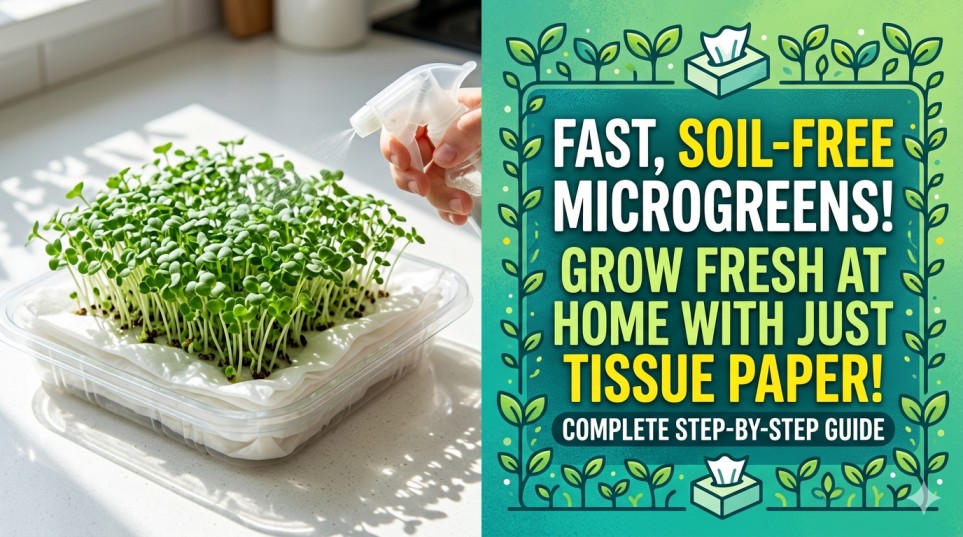
How to Grow Microgreens with Tissue Paper: The Ultimate Beginner’s Guide
Introduction
Learning how to grow microgreens with tissue paper is one of the most cost-effective and rewarding ways to start your indoor gardening journey. Many people think that you need expensive soil, complex hydroponic setups, or specialized equipment to produce fresh greens at home, but that is simply not the case. By understanding how to grow microgreens with tissue paper, you can turn a simple kitchen counter into a productive mini-farm. This method is particularly popular because it is clean, soil-free, and uses items you likely already have in your bathroom or kitchen cabinets. Throughout this guide, we will explore the precise techniques required to master how to grow microgreens with tissue paper so that you can enjoy nutrient-dense harvests every single week. Whether you are a student, an urban dweller with limited space, or just a curious gardener, mastering how to grow microgreens with tissue paper will provide you with a sustainable source of fresh garnishes and salads right at your fingertips.
Why Choose Tissue Paper for Growing Microgreens?
When you decide how to grow microgreens with tissue paper, you are choosing a method that prioritizes cleanliness and simplicity. Unlike traditional soil, which can be messy and sometimes carry pests or fungi, learning how to grow microgreens with tissue paper ensures a sterile environment for your delicate sprouts. This medium is excellent for holding just enough moisture to trigger germination without drowning the seeds. Furthermore, knowing how to grow microgreens with tissue paper allows you to see the root development clearly, making it a great educational tool for children or beginner botanists. The ease of disposal is another major benefit; once you harvest, you simply compost or discard the used paper, making the process of how to grow microgreens with tissue paper incredibly efficient for busy individuals.
Essential Materials for Your Soil-Free Garden
To successfully implement how to grow microgreens with tissue paper, you need a few basic supplies. First, you will need high-quality seeds; arugula, radish, and broccoli are excellent choices when practicing how to grow microgreens with tissue paper. You will also need a shallow tray or even a recycled plastic food container. The core of this method involves unscented, plain white tissue paper or paper towels. It is vital to avoid dyed or heavily fragranced papers when learning how to grow microgreens with tissue paper, as chemicals can leach into your plants. Additionally, a spray bottle filled with filtered water is essential for maintaining the humidity required in the process of how to grow microgreens with tissue paper. Having these tools ready ensures that your journey into how to grow microgreens with tissue paper starts on the right foot.
Comparison: Tissue Paper vs. Cotton Pads
| Medium Type | Water Retention Capability |
|---|---|
| Tissue Paper | Moderate and even distribution |
| Cotton Pads | High but can become waterlogged |
Preparing the Growth Bed Correctly
The first physical step in how to grow microgreens with tissue paper is preparing your “growing bed.” You should take several sheets of tissue paper and layer them at the bottom of your tray. When considering how to grow microgreens with tissue paper, about 4 to 6 layers are usually sufficient to create a stable base that can hold moisture. Once the layers are flat, you must mist them thoroughly with your spray bottle. In the context of how to grow microgreens with tissue paper, the paper should be damp to the touch but not sitting in a pool of standing water. If you add too much water while learning how to grow microgreens with tissue paper, the seeds might rot before they even have a chance to sprout. Achieving this balance is the “secret sauce” of how to grow microgreens with tissue paper.
Sowing the Seeds for Maximum Yield
Once your bed is ready, the next phase of how to grow microgreens with tissue paper is sowing. You want to spread your seeds evenly across the damp surface. When practicing how to grow microgreens with tissue paper, density is important; you want the seeds to be close together but not overlapping in thick clumps. A crowded tray in how to grow microgreens with tissue paper can lead to poor air circulation and mold growth. After spreading the seeds, give them one more light misting. Many experts in how to grow microgreens with tissue paper recommend covering the tray with another damp piece of paper or a lid for the first 48 hours to create a dark, humid “blackout” period. This stage of how to grow microgreens with tissue paper mimics the environment of being underground, encouraging the seeds to stretch upwards.
Comparison: Seed Density Levels
| Sowing Strategy | Expected Growth Outcome |
|---|---|
| Sparse Sowing | Stronger stems but lower total yield |
| Dense Sowing | High yield but requires more airflow |
Managing Light and Moisture Levels
After the initial blackout phase of how to grow microgreens with tissue paper, your seeds will begin to show tiny roots and “proto-leaves.” At this point, how to grow microgreens with tissue paper requires you to move the tray into a well-lit area, such as a windowsill. Direct sunlight is good, but even bright indirect light works well when you are figuring out how to grow microgreens with tissue paper. Moisture management remains critical; you must spray the tissue paper twice a day. Because tissue paper is thin, it dries out faster than soil, which is a key factor to remember when studying how to grow microgreens with tissue paper. If the paper dries out completely, the microgreens will wilt within hours. Consistency is the most important habit to develop while perfecting how to grow microgreens with tissue paper.
Preventing Mold and Common Issues
A common challenge when learning how to grow microgreens with tissue paper is the appearance of white fuzz. Beginners often mistake root hairs for mold, but in the process of how to grow microgreens with tissue paper, root hairs are a sign of a healthy plant looking for water. However, if you notice a slimy texture or a bad smell, that is actual mold. To prevent this while following the rules of how to grow microgreens with tissue paper, ensure your tray has adequate ventilation. If you live in a very humid environment, you might need a small fan nearby to keep the air moving around your project of how to grow microgreens with tissue paper. Using clean water and sterilized trays also helps maintain the integrity of how to grow microgreens with tissue paper and prevents crop failure.
Comparison: Root Hairs vs. Mold
| Appearance | Health Indicator |
|---|---|
| Tiny White Fuzz at Base | Healthy root development |
| Grey/Green Slimy Patches | Fungal growth due to overwatering |
The Best Seed Varieties for Paper Growing
Not all seeds are created equal when it comes to how to grow microgreens with tissue paper. Smaller seeds generally perform better on paper surfaces. For instance, radish seeds are famous for how to grow microgreens with tissue paper because they germinate quickly and have a spicy kick. Broccoli and kale are also top-tier choices for how to grow microgreens with tissue paper due to their high nutritional profile and sturdy stems. On the other hand, very large seeds like peas or sunflowers can be a bit more difficult when exploring how to grow microgreens with tissue paper, as they often require more “anchorage” than thin paper can provide. Sticking to brassicas is usually the safest bet for anyone just starting to learn how to grow microgreens with tissue paper.
Comparison: Growth Speed by Variety
| Seed Variety | Days to Harvest |
|---|---|
| Radish | 5 to 7 days |
| Broccoli | 8 to 12 days |
Harvesting Your Fresh Microgreens
The most exciting part of how to grow microgreens with tissue paper is the harvest, which usually happens between day 7 and day 14. You will know it is time when the first set of true leaves begins to appear. To harvest in the method of how to grow microgreens with tissue paper, simply take a sharp pair of scissors and snip the greens just above the paper line. Since you are using the method of how to grow microgreens with tissue paper, the stems will be very clean and free of grit. It is best to harvest only what you need for your immediate meal to keep the rest fresh. Once you have finished harvesting everything from your setup of how to grow microgreens with tissue paper, you can simply toss the paper into the compost and start a new batch immediately.
Storing and Using Your Harvest
After you have successfully mastered how to grow microgreens with tissue paper, you need to know how to store your bounty. If you have extra greens after your how to grow microgreens with tissue paper project, place them between dry paper towels in a sealed container in the fridge. They will stay fresh for about 5 days. These greens produced via how to grow microgreens with tissue paper are perfect for topping avocado toast, stirring into omelets, or garnishing soups. The intense flavor profile you get from how to grow microgreens with tissue paper is often much stronger than full-grown vegetables. By consistently practicing how to grow microgreens with tissue paper, you ensure that your meals are always packed with vitamins and minerals without needing a large outdoor garden.
Comparison: Storage Methods
| Storage Technique | Freshness Duration |
|---|---|
| Open bowl in fridge | 1 to 2 days |
| Sealed container with dry towel | 5 to 7 days |
Conclusion
In conclusion, understanding how to grow microgreens with tissue paper opens up a world of possibilities for home-based agriculture. This guide has detailed every necessary step, from selecting the right paper to the final harvest, ensuring that you have the knowledge to succeed. How to grow microgreens with tissue paper is not just a gardening hack; it is a lifestyle shift toward more sustainable and healthy eating habits. By removing the need for soil and expensive equipment, how to grow microgreens with tissue paper makes nutrition accessible to everyone, regardless of their living situation. As you continue to experiment with how to grow microgreens with tissue paper, you will likely find it to be one of the most satisfying DIY projects in your home. Remember that the key to how to grow microgreens with tissue paper lies in consistent moisture and patience. Now that you are equipped with the skills of how to grow microgreens with tissue paper, it is time to grab some seeds and start your first tray today.