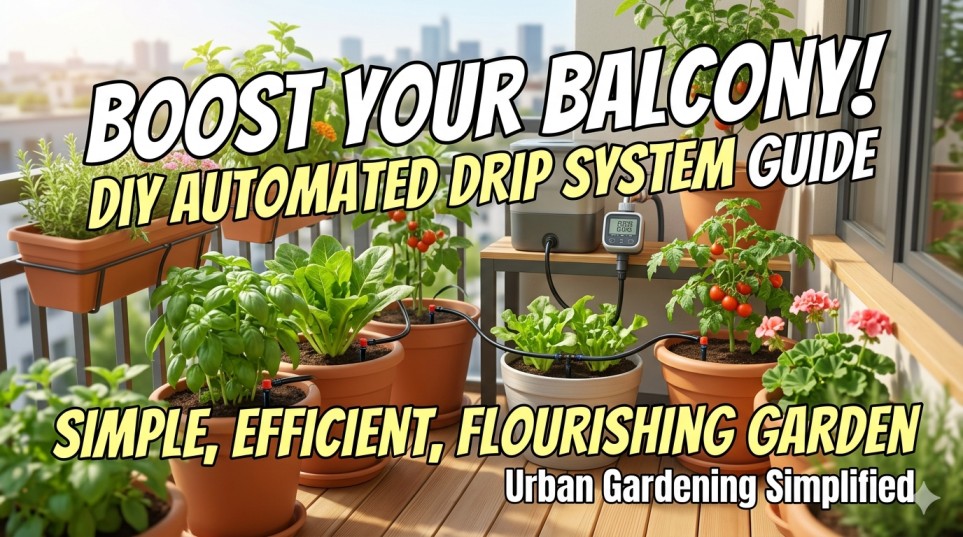
The Complete Guide to Setting Up a DIY Automated Drip System for Balconies
Introduction
Creating a DIY automated drip system for balconies is the most effective way to ensure your urban garden thrives even when you are busy or traveling. Many apartment dwellers struggle with consistent watering, but a DIY automated drip system for balconies solves this problem by delivering precise amounts of water directly to the roots of your plants. This guide will walk you through every step of designing and installing a DIY automated drip system for balconies that fits your specific space and plant needs. A well-constructed DIY automated drip system for balconies not only saves time but also conserves water, making it an eco-friendly choice for modern gardeners. Whether you grow succulents, vegetables, or flowers, a DIY automated drip system for balconies provides the consistency required for healthy growth. Investing a little effort into a DIY automated drip system for balconies now will reward you with a lush, green sanctuary all year round. In the following sections, we will explore the components, assembly, and maintenance of your DIY automated drip system for balconies to ensure total success.
Why You Need a DIY Automated Drip System for Balconies
The primary reason to install a DIY automated drip system for balconies is the extreme evaporation that occurs in container gardening. Balcony plants are often exposed to high winds and intense sunlight, making a DIY automated drip system for balconies essential to prevent soil from drying out too quickly. Without a DIY automated drip system for balconies, you might find yourself watering twice a day during the summer heat. By using a DIY automated drip system for balconies, you create a stable environment where plants do not experience the stress of dehydration. This stability is the secret to getting professional-looking results from a DIY automated drip system for balconies in a small outdoor space.
Another benefit of the DIY automated drip system for balconies is the prevention of disease. When you water by hand, it is easy to splash soil and pathogens onto leaves, but a DIY automated drip system for balconies keeps the foliage dry by targeting the soil surface. This targeted approach of a DIY automated drip system for balconies reduces the risk of fungal infections and rot. Furthermore, a DIY automated drip system for balconies allows you to automate your feeding schedule by adding liquid nutrients to the water source. This level of control makes a DIY automated drip system for balconies a superior choice for serious balcony farmers.
Essential Components of a DIY Automated Drip System for Balconies
To build a high-quality DIY automated drip system for balconies, you need a few core components that work together seamlessly. The brain of your DIY automated drip system for balconies is the digital timer, which connects to your faucet or a water tank. Next, the main distribution tubing of the DIY automated drip system for balconies carries the water across the length of your balcony. Emitters are then placed along this line in your DIY automated drip system for balconies to release water into individual pots. High-quality emitters in a DIY automated drip system for balconies ensure that each plant receives the exact gallon-per-hour flow it requires.
Don’t forget the importance of a pressure regulator in your DIY automated drip system for balconies. Most home faucets have too much pressure for a delicate DIY automated drip system for balconies, which can cause tubes to pop off. A filter is also a vital part of a DIY automated drip system for balconies to prevent sediment from clogging your emitters. Choosing durable, UV-resistant materials for your DIY automated drip system for balconies will prevent the sun from cracking your pipes over time. Once you have these parts, assembling your DIY automated drip system for balconies becomes a straightforward afternoon project.
Component Comparison
| System Component | Primary Function |
|---|---|
| Digital Water Timer | Controls the watering schedule automatically |
| Micro-Tubing | Transports water to individual containers |
| Drip Emitters | Regulates the flow of water per plant |
| Backflow Preventer | Protects home water from contamination |
Planning Your DIY Automated Drip System for Balconies Layout
Before buying parts, sketch a map of your pots to plan the path for your DIY automated drip system for balconies. Consider the distance between your water source and the furthest pot to ensure your DIY automated drip system for balconies has enough reach. Grouping plants with similar water needs together helps your DIY automated drip system for balconies run more efficiently. For instance, putting thirsty ferns on one line of your DIY automated drip system for balconies and cacti on another is a smart strategy. Proper planning ensures you don’t run out of tubing halfway through installing your DIY automated drip system for balconies.
Think about the height of your containers when designing the DIY automated drip system for balconies. If you have hanging baskets, your DIY automated drip system for balconies will need vertical lines secured to the walls or railings. Using clips to keep the DIY automated drip system for balconies tubing tucked away makes the setup look professional and prevents tripping hazards. A well-organized DIY automated drip system for balconies is much easier to troubleshoot if a leak occurs later on. Taking the time to measure twice will save you multiple trips to the hardware store for your DIY automated drip system for balconies project.
Layout Efficiency Comparison
| Layout Style | Best Use Case |
|---|---|
| Linear Single Line | Standard rows of pots along a railing |
| Loop Circuit | Ensuring equal pressure in large setups |
| Branching Manifold | Multiple levels of shelves and baskets |
| Gravity-Fed Tank | Balconies without a direct water faucet |
Step-by-Step Installation of the DIY Automated Drip System for Balconies
Start your DIY automated drip system for balconies by attaching the timer and pressure regulator to your water source. Lay out your main supply line along the floor or railing where your DIY automated drip system for balconies will reside. Use a hole punch tool specifically designed for a DIY automated drip system for balconies to insert your emitters or 1/4-inch micro-tubing. Make sure every connection in the DIY automated drip system for balconies is tight to avoid wasting water. Testing the DIY automated drip system for balconies before you leave it unattended is the most critical step of the installation process.
Once the lines are placed, run the DIY automated drip system for balconies for five minutes to flush out any debris. Then, close the end of the line using an end-cap or a figure-eight clamp to pressurize your DIY automated drip system for balconies. Adjust the emitters on your DIY automated drip system for balconies until you see a steady drip rather than a stream. If some plants in the DIY automated drip system for balconies aren’t getting water, check for kinks in the tubing. Fine-tuning the flow is what separates a basic setup from a truly professional DIY automated drip system for balconies.
Installation Step Comparison
| Action Item | Expected Result |
|---|---|
| Punching Main Line | Creates entry points for micro-lines |
| Securing End Caps | Builds necessary pressure in the system |
| Staking Emitters | Holds the water source at the root zone |
| Setting the Timer | Enables hands-free daily operation |
Watering Schedules for a DIY Automated Drip System for Balconies
Finding the right frequency for your DIY automated drip system for balconies depends on your local climate and pot size. Generally, running your DIY automated drip system for balconies early in the morning is best to minimize evaporation. During heatwaves, you may need to program your DIY automated drip system for balconies to run for a second short burst in the evening. Small terracotta pots lose moisture quickly and might need more time from the DIY automated drip system for balconies than large plastic ones. Consistency is the goal of any DIY automated drip system for balconies to keep the soil moisture levels even.
Over-watering is a risk even with a DIY automated drip system for balconies, so check the soil manually once a week. If the soil is soggy, reduce the run time on your DIY automated drip system for balconies timer immediately. Conversely, if leaves are wilting, increase the duration of each DIY automated drip system for balconies cycle. The flexibility of a digital timer allows your DIY automated drip system for balconies to adapt as the seasons change from spring to summer. Monitoring your plants’ reaction to the DIY automated drip system for balconies will help you find the “sweet spot” for growth.
Seasonal Schedule Comparison
| Season Type | Recommended Frequency |
|---|---|
| Mild Spring | Once every two days for ten minutes |
| Peak Summer | Twice daily for fifteen minutes each |
| Early Autumn | Once daily for ten minutes |
| Dormant Winter | Once a week or system winterization |
Maintaining Your DIY Automated Drip System for Balconies
To keep your DIY automated drip system for balconies working perfectly, you must perform regular maintenance checks. Inspect the emitters of your DIY automated drip system for balconies monthly to ensure they haven’t been blocked by mineral deposits. If you have hard water, soaking the emitters of your DIY automated drip system for balconies in vinegar can help clear them. Also, check the battery level on your DIY automated drip system for balconies timer at the start of every season. A dead battery can cause your DIY automated drip system for balconies to stop working, which could be fatal for your plants during a vacation.
Check the tubing of your DIY automated drip system for balconies for any leaks or chew marks from local pests like squirrels. Repairing a small leak in the DIY automated drip system for balconies is easy with a simple coupling fitting. In the winter, if you live in a freezing climate, it is wise to drain the DIY automated drip system for balconies to prevent ice from bursting the pipes. Taking these small steps will extend the life of your DIY automated drip system for balconies for many years. A well-maintained DIY automated drip system for balconies is a reliable partner in your gardening journey.
Maintenance Task Comparison
| Maintenance Task | Frequency Requirement |
|---|---|
| Filter Cleaning | Every three to six months |
| Battery Replacement | Once per year at the start of spring |
| Emitter Inspection | Once every month during peak growth |
| Tubing Flush | Once at the beginning of the season |
Troubleshooting Common DIY Automated Drip System for Balconies Issues
If you notice uneven watering in your DIY automated drip system for balconies, it is often a sign of pressure loss. This can happen if the main line of the DIY automated drip system for balconies is too long or has too many emitters attached. To fix this in your DIY automated drip system for balconies, you can split the setup into two separate zones with two different timers. Another common issue with a DIY automated drip system for balconies is air bubbles getting trapped in the lines. Simply running the DIY automated drip system for balconies without the end caps for a minute can usually clear these air locks.
Leaking connectors in a DIY automated drip system for balconies are usually caused by mismatched tube sizes or lack of a hose clamp. Always ensure your DIY automated drip system for balconies parts are compatible, preferably from the same manufacturer. If the DIY automated drip system for balconies timer isn’t clicking on, check the manual override to see if the internal valve is stuck. Most problems with a DIY automated drip system for balconies are easy to solve with a bit of patience and observation. Don’t let a small setback discourage you from enjoying the convenience of your DIY automated drip system for balconies.
Conclusion
In conclusion, a DIY automated drip system for balconies is the ultimate solution for any urban gardener looking to simplify their routine. By following this guide, you have learned how a DIY automated drip system for balconies can save water, prevent plant disease, and provide peace of mind. We have covered the essential parts of a DIY automated drip system for balconies, from the digital timer to the specialized emitters. Installing a DIY automated drip system for balconies is a rewarding project that pays for itself through healthier plants and lower water bills. Remember that the success of your DIY automated drip system for balconies depends on careful planning and regular maintenance. As your balcony garden grows, your DIY automated drip system for balconies can easily be expanded to accommodate new pots and planters. Embracing the technology of a DIY automated drip system for balconies allows you to enjoy the beauty of nature without the stress of manual labor. Start building your DIY automated drip system for balconies today and watch your balcony transform into a lush paradise!