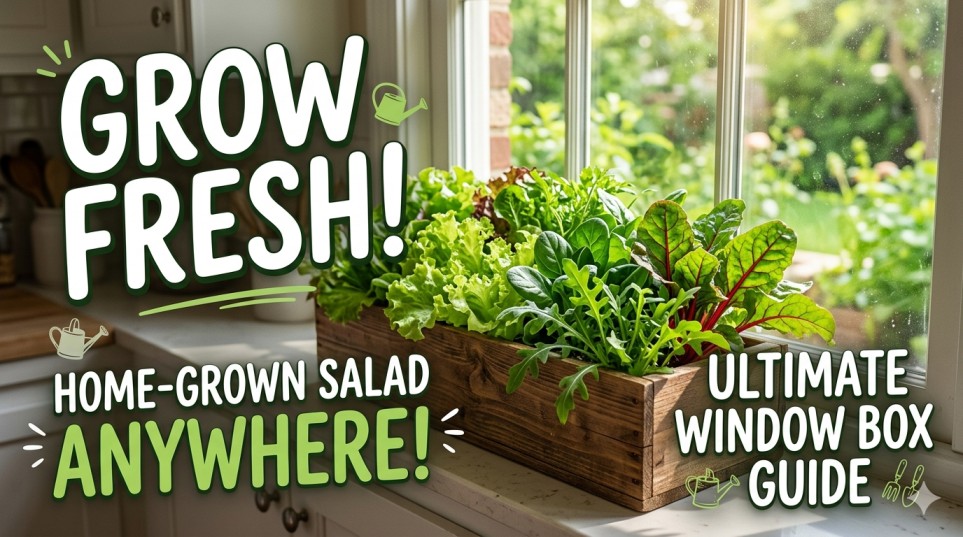
Grow Your Own Salad in a Window Box: A Complete Guide for Beginners
Introduction to Growing Your Own Salad
Finding fresh, organic greens can be a challenge in busy urban environments, but you can Grow Your Own Salad in a Window Box with very little effort. This method allows anyone, regardless of their living situation, to enjoy crisp lettuce and spicy arugula right from their windowsill. When you decide to Grow Your Own Salad in a Window Box, you are taking control of your food source and ensuring that no harmful pesticides touch your leaves. The process of learning how to Grow Your Own Salad in a Window Box is therapeutic and highly rewarding for people of all ages. Throughout this guide, we will explore the essential steps to Grow Your Own Salad in a Window Box so that you can harvest fresh ingredients for your meals every single day. Growing food at home has never been easier than when you Grow Your Own Salad in a Window Box using simple materials and basic sunlight. Let us dive into the details of how to Grow Your Own Salad in a Window Box successfully.
Why You Should Grow Your Own Salad in a Window Box
The primary benefit when you Grow Your Own Salad in a Window Box is the unmatched freshness of the produce. Store-bought greens often lose nutrients during transport, but when you Grow Your Own Salad in a Window Box, you harvest them seconds before eating. Another reason to Grow Your Own Salad in a Window Box is the cost-effectiveness, as a single packet of seeds costs less than one plastic tub of spinach. Many people choose to Grow Your Own Salad in a Window Box because it maximizes small spaces like balconies or narrow ledges. You can effectively Grow Your Own Salad in a Window Box even if you do not have a backyard or a large garden plot. It is a sustainable way to live, and once you start to Grow Your Own Salad in a Window Box, you will notice a significant improvement in the flavor of your homemade dishes.
Choosing the Right Container for Your Window Box
To successfully Grow Your Own Salad in a Window Box, the container must have excellent drainage holes at the bottom. Most greens have shallow roots, making it easy to Grow Your Own Salad in a Window Box that is only six inches deep. You should select a material like plastic or wood to Grow Your Own Salad in a Window Box because these materials regulate moisture well. If the container is too heavy, it might be difficult to Grow Your Own Salad in a Window Box on a standard window ledge safely. Always measure your space before you attempt to Grow Your Own Salad in a Window Box to ensure the box fits securely. The right setup is the foundation for anyone looking to Grow Your Own Salad in a Window Box without facing common gardening frustrations.
Comparing Container Materials
| Material Type | Benefit for Salad Box |
|---|---|
| Plastic Boxes | Retains moisture longer for thirsty greens |
| Terracotta Pots | Breathable material that prevents root rot |
| Wooden Crates | Provides natural insulation against temperature shifts |
| Metal Troughs | Extremely durable and modern looking |
| Fabric Bags | Allows for air pruning of the roots |
Best Salad Varieties for Small Spaces
Not every plant is suited for a small container, but many leafy greens are perfect to Grow Your Own Salad in a Window Box. Loose-leaf lettuce is perhaps the easiest variety to Grow Your Own Salad in a Window Box because you can harvest individual leaves. You might also want to Grow Your Own Salad in a Window Box using spinach, which thrives in the slightly cooler air found near windows. Radishes are a great companion when you Grow Your Own Salad in a Window Box because they grow very quickly in tight quarters. If you enjoy a bit of spice, try to Grow Your Own Salad in a Window Box with mustard greens or arugula. Diversifying the seeds helps you Grow Your Own Salad in a Window Box that offers a complex range of vitamins and minerals. The goal is to Grow Your Own Salad in a Window Box that looks as beautiful as it tastes.
Salad Variety Comparison
| Plant Variety | Growth Characteristic |
|---|---|
| Butterhead Lettuce | Soft texture and mild sweet flavor |
| Arugula | Fast growing with a peppery kick |
| Baby Spinach | High iron content and loves partial shade |
| Red Leaf Lettuce | Adds vibrant color to your window display |
| Swiss Chard | Very hardy and lasts through heat waves |
The Perfect Soil Mix for Window Boxes
Standard garden soil is too heavy to Grow Your Own Salad in a Window Box and may contain pests. Instead, use a high-quality potting mix to Grow Your Own Salad in a Window Box because it is fluffy and well-draining. Adding compost is a smart move when you Grow Your Own Salad in a Window Box as it provides natural slow-release nutrients. Since the plants are in a confined space, the soil quality is vital to Grow Your Own Salad in a Window Box that remains healthy. Avoid using dirt from your yard to Grow Your Own Salad in a Window Box because it can compact and suffocate the roots. A mix of peat moss, perlite, and compost is the ideal recipe to Grow Your Own Salad in a Window Box. When the soil is right, you will find it much easier to Grow Your Own Salad in a Window Box year-round.
Sunlight and Water Requirements
Leafy greens generally need about four to six hours of sunlight to Grow Your Own Salad in a Window Box effectively. If your window faces south, you will have the best light to Grow Your Own Salad in a Window Box during the winter months. Watering is the most frequent task when you Grow Your Own Salad in a Window Box because small containers dry out quickly. You should check the soil daily to Grow Your Own Salad in a Window Box that never wilts from thirst. If the sun is too intense, you may need to provide shade to Grow Your Own Salad in a Window Box without the leaves turning bitter. Consistent care is the secret to Grow Your Own Salad in a Window Box that stays lush and green. Balance is key when you Grow Your Own Salad in a Window Box in a sunny location.
Watering vs. Sunlight Balance
| Environmental Factor | Impact on Growth |
|---|---|
| Full Morning Sun | Encourages rapid leaf production |
| Daily Mist Irrigation | Keeps leaves crisp in dry indoor air |
| Afternoon Shade | Prevents plants from bolting or seeding early |
| Deep Weekly Soak | Encourages roots to grow deeper in the box |
| Reflected Light | Helps plants grow evenly from all sides |
Planting Your Window Box Salad
To begin, sprinkle your seeds evenly over the soil surface to Grow Your Own Salad in a Window Box without overcrowding. You do not need to bury them deep; a light dusting of soil is enough to Grow Your Own Salad in a Window Box. Using the “cut and come again” method is the best way to Grow Your Own Salad in a Window Box for a continuous harvest. This technique allows you to Grow Your Own Salad in a Window Box and harvest only what you need while the plant keeps growing. Space the rows about three inches apart to Grow Your Own Salad in a Window Box with enough airflow between plants. Many beginners fail because they plant too many seeds, so be patient as you Grow Your Own Salad in a Window Box. Watching the first sprouts appear is the most exciting part of the journey to Grow Your Own Salad in a Window Box.
Managing Pests and Common Problems
Even though you Grow Your Own Salad in a Window Box indoors or on a ledge, small insects like aphids can appear. Inspect the leaves regularly to Grow Your Own Salad in a Window Box that remains pest-free. If you see yellowing leaves while you Grow Your Own Salad in a Window Box, it might be a sign of overwatering. Proper airflow is essential to Grow Your Own Salad in a Window Box without developing fungus or mold issues. Using a simple soap and water spray can help you Grow Your Own Salad in a Window Box safely without using chemicals. Most problems that occur when you Grow Your Own Salad in a Window Box are easily fixed with a few minor adjustments. Staying observant is part of the fun when you Grow Your Own Salad in a Window Box.
Problem and Solution Chart
| Common Issue | Simple Fix |
|---|---|
| Yellowing Leaves | Reduce watering frequency immediately |
| Leggy Stems | Move the box to a brighter window |
| Tiny Green Bugs | Wipe leaves with a damp cloth or neem oil |
| Bitter Taste | Harvest earlier and keep the soil cooler |
| Slow Growth | Apply a liquid organic fertilizer every two weeks |
Harvesting Your Fresh Greens
The best time to harvest when you Grow Your Own Salad in a Window Box is in the early morning. Use clean scissors to Grow Your Own Salad in a Window Box harvest by cutting leaves about an inch above the soil. Never pull the entire plant out if you want to Grow Your Own Salad in a Window Box that regrows multiple times. Taking just the outer leaves allows the center to continue to Grow Your Own Salad in a Window Box. Once you have enough for a bowl, wash them gently to enjoy the fruits of your labor to Grow Your Own Salad in a Window Box. You will find that the flavor is much more intense when you Grow Your Own Salad in a Window Box yourself. The harvest phase is the ultimate reward for your commitment to Grow Your Own Salad in a Window Box.
Harvesting Techniques
| Method Name | How It Works |
|---|---|
| Thinning Harvest | Pulling out small plants to give others room |
| Outer Leaf Snip | Taking only the oldest leaves from the outside |
| Shearing | Cutting the whole box at once for a big meal |
| Succession Planting | Sowing new seeds every two weeks for a cycle |
| Individual Leaf Pick | Selecting specific leaves based on size and need |
Conclusion: The Future of Home Gardening
In conclusion, the decision to Grow Your Own Salad in a Window Box is a transformative step toward a healthier and more sustainable lifestyle. It proves that you do not need a vast amount of land to produce high-quality food, as anyone can Grow Your Own Salad in a Window Box with minimal resources. By choosing to Grow Your Own Salad in a Window Box, you reduce your carbon footprint and eliminate the need for plastic packaging associated with grocery store produce. The simplicity of the process makes it an ideal project for beginners who want to Grow Your Own Salad in a Window Box without feeling overwhelmed. As you continue to Grow Your Own Salad in a Window Box, your confidence as a gardener will grow, leading to even more ambitious home-growing projects. Remember that the key to success when you Grow Your Own Salad in a Window Box is consistency in watering and light. Enjoy the amazing taste and health benefits that come when you finally Grow Your Own Salad in a Window Box.